777 tours · from €76 · page 27 of 33
Tours in Montenegro
The Bay of Kotor, the Tara canyon and the Durmitor massif, inside a country the size of an English county.
- Tours listed
- 777
- Lowest price
- €76
- Activity types
- 21
What runs in Montenegro
Sorted by how often they are booked, most first.
-

Chill out in Montenegro 5 nights / 6 days
You will be accommodated in the capital of Montenegro, Podgorica city, from where next days you will visit stunning Adriatic (Budva – metropolis of tourism, also known as ‘Queen of Adriatic’, Perast…
- Duration
- 144 hours
- From
- €1600.88
-

Kotor transfer to Podgorica airport TGD/city
We are proffessional at our job. Our guides are English speaking . You will enjoy in this 90 minutes of transfer through the beautiful parts of the country.
- Duration
- 2 hours
- From
- €76
-

Small Group Tour Montenegro Coastal Experience
This tour is specifically designed for cruise ship guests who want to experience the very best of the Bay of Kotor in one perfectly timed and well-organized shore excursion. With guaranteed return to…
- Duration
- 4-5 hours
- From
- €220
-

Private Tour to Virpazar Fishing Village & Amazing Skadar Lake
We begin this adventure in Kotor. We make our way towards the Skadar Lake and an authentic fishing place in Virpazar, located on the confluence of rivers which flow directly into the lake, only 10 km…
- Duration
- 5-6 hours
- From
- €257
-

Wine and Gastronomy Private Tour in Montenegro
Let’s discover a small place on the same river - Rijeka Crnojevića, on the shore of Skadar Lake, known as the Montenegrin Venice. In its vicinity, there are remains of the Obod printing office, where…
- Duration
- 6-8 hours
- From
- €287.2
-

Private Fishing and Boat Tour Bar Montenegro
Private and fully customized boat tours from Marina Bar. Explore hidden coves, stunning coastline, swimming spots, and fishing locations with a flexible itinerary designed around your preferences.
- Duration
- 5 hours
- From
- €432
-

Montenegro Canyons Private Tour from Kotor
Canyoning is the most exciting way to explore the rivers and mountains of Montenegro. Montenegro Canyon tour will provide you an amazing experience throught the drive along the whole country in only…
- Duration
- 12 hours
- From
- €440
-

Tour to Ostrog Monastery Montenegro
This tour will take you to the holiest and most visited place in our country, of exceptional beauty, famous as Ostrog Monastery. The tour usually starts from Kotor, towards the city of Nikšić to reac…
- Duration
- 3-4 hours
- From
- €577.4
-

The first chapter of Montenegro - Private Tour
The first chapter of Montenegro - something that all tourists should see first when they come to Montenegro. From Podgorica, the first stop will be the Ostrog Monastery, where you will get to know t…
- Duration
- 5-6 hours
- From
- €490
-

Kotor Day Trip from Bar Montenegro
Bar to Kotor a scenic coastal tour with a professional driver, via Budva Riviera. Enjoy stunning views of the Adriatic coastline and a 15-minute photo stop above the iconic Sveti Stefan viewpoint,…
- Duration
- 7 hours
- From
- €801
-

New Year in Montenegro 7 nights / 8 days
Welcome to Montenegro and start your New Year holiday in this beautiful country with the help of Monte Mare Travel. In this 8 days arrangement, visit the most recognizable places and monuments that a…
- Duration
- 192 hours
- From
- €1678.29
-

Grand Boka Bay Tour
If you want to discover why Boka Bay is under the protection of UNESCO - this is the perfect tour for you. You will visit Perast and man-made island Our Lady of the Rocks, you will see Roman mosaics…
- Duration
- 5 hours
- From
- €450
-

Montenegro Bay: Bar Private Shore Excursion and Budva from Port
This private tour offers a comfortable and flexible way to explore some of Montenegro’s most iconic coastal and historical landmarks including pick-up and drop-off directly at the port of Bar. Travel…
- Duration
- 5-6 hours
- From
- €391.67
- Difficulty
- Easy
-

Adventure park ’Lovcen’ and Njegos’s Mausoleum
Lovćen is the symbol of Montenegro and its freedom. The mountain is located at 1749 m above sea level, and in 1952, it was declared a national park. On one of the peaks of Lovćen, Jezerski vrh – 1675…
- Duration
- 4 hours
- From
- €181.45
-

Taxi Transfer Budva to Durres
We offer first class taxi transfer services from Budva with professional english speaking driver who give you a lot off interesting information about Montenegro and Albania history and a lot info abo…
- Duration
- 3 hours
- From
- €265
-

Budva to Dubrovnik one way transfer
Enjoy a smooth transfer from Budvać褚đ to city of Dubrovnik, taking you through a region of beautiful coastline in stile and comfort.
- Duration
- 2 hours
- From
- €295
-

Private Cetinje Gastronomy and City Tour
Let’s visit Cetinje – a small city museum with beautiful monuments, promenades and nature under the huge mountain Lovćen. Cetinje is the former capital of Montenegro. It was founded in the 15th centu…
- Duration
- 3-5 hours
- From
- €248.75
-

8 Day Private Albanian Alps Trail Guided Hiking Private Tour
This is a tour which perfectly combines Montenegro and Albania's culture with the beautiful mountain nature of the Albanian Alps - a region shared by both countries. This tour goes along the famous P…
- Duration
- 192 hours
- From
- €1923
-

Kotor Adventure with Cable Car and Montenegrin Plate
This experience combines the very best of Kotor — its fascinating history, breathtaking views, and authentic local flavors — all in one unforgettable day. Begin with a guided walking tour through the…
- Duration
- 3 hours
- From
- €122
-

Private Sightseeing Skadar Lake Cruise and Crnojevića River
The Lake Skadar region is home to some of the most mesmerizing sights that one should not miss when visiting Montenegro. Among them, the Crnojevića River stands out as the most beautiful river in the…
- Duration
- 3 hours
- From
- €100
-

VAN Private transfers from Airport Podgorica and city to Budva
Professional, reliable, safe and comfortable transfers in whole Montenegro and region. All of our drivers are english speaking, non-smokers and with many years of driving experience. Our vehicles are…
- Duration
- 1-2 hours
- From
- €115
-
Taxi Airport Tivat to Tirana
We offer first class taxi Airport transfer from Tivat, full services with professional english speaking driver who give a client a lot off interesting information ...
- Duration
- 4 hours
- From
- €330
-

Half-Day Private Tour of Kotor with Cooking Class
Kotor is a city and municipality on the coast of the Boka Bay in Montenegro. Situated in one of the most beautiful bays, this town of merchants and sailors has a lot to show. The old Mediterranean…
- Duration
- 4-6 hours
- From
- €280.33
-

Private Shore Tour in Tivat from Kotor Cruise Port
Experience our Private Full Day Shore Excursion tailored exclusively for Cruise Ship Passengers! Embark on a serene journey through the picturesque landscapes of Montenegro as you make your way to th…
- Duration
- 7 hours
- From
- €355
Showing 0 of 777tours
Run tours in Montenegro? List them on AlbaniaVisit.
Reach 20,000+ travellers a month planning their Albania trip. Keep 75% of every booking — 25% commission against Viator's and GetYourGuide's 30%, paid in euros to your bank weekly, no listing fee.
Getting there, paying, and when to come
Getting there
Podgorica (TGD) and Tivat (TIV) both take European traffic; Tivat is the one for the coast.
Currency
Euro (EUR) throughout the country.
When to come
June to September for coast and mountains; December to March for winter sports.
The countries either side
Gallery
More from Montenegro
Choosing a Montenegro tour
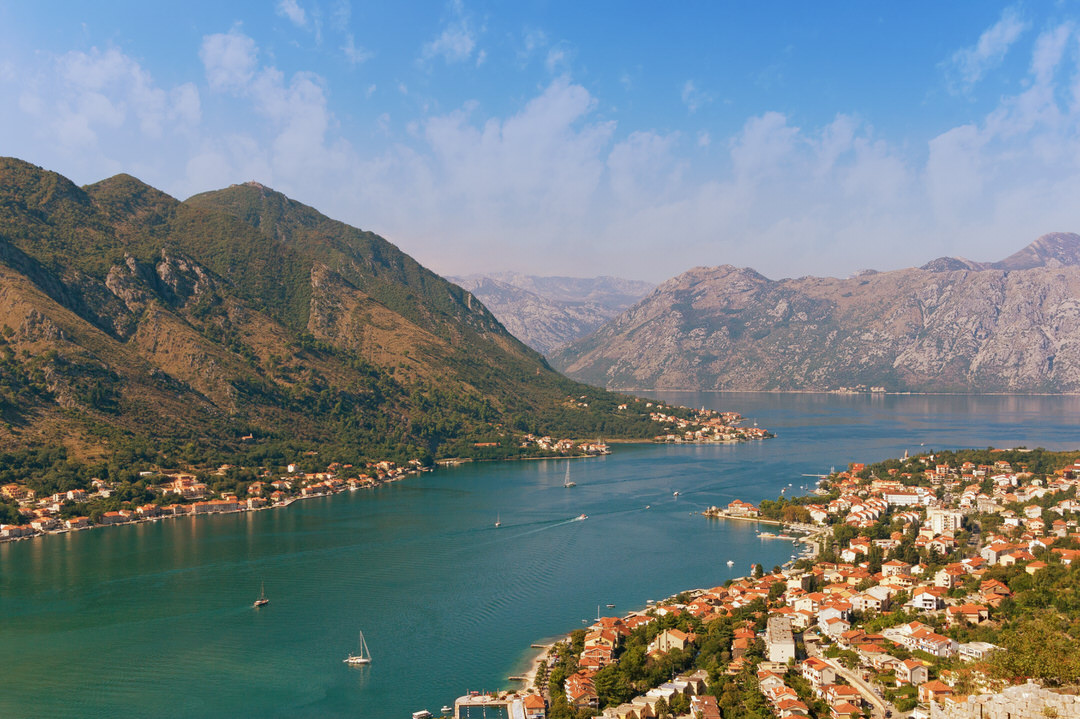
Montenegro packs a lot into a small country, and most of what draws people sits around the Bay of Kotor — a deep, winding inlet ringed by mountains that looks like a fjord but is actually a drowned river canyon. Kotor's walled old town is the anchor: a UNESCO-listed medieval maze of stone lanes, with a fortress wall you can climb for the classic bay view (bring water, it's a steep haul). Down the coast is Budva, older than it looks under the resort veneer, plus the much-photographed Sveti Stefan islet, which is a private hotel you view rather than visit. The boat tours are the real reason to come: out of Kotor or Perast you reach Our Lady of the Rocks, a man-made islet with a church, and the Blue Cave near the Luštica peninsula, where the water glows on a clear morning. It's genuinely worth doing. The honest catch is that Kotor is a major cruise port, so in peak summer the old town and the bay fill up fast. Montenegro uses the euro even though it isn't in the EU, so pricing feels familiar. Many tours here run as combined Balkans trips paired with Albania or Croatia.
Decide first whether you want a boat tour or a land day trip — they're different experiences. Bay of Kotor boat tours (Our Lady of the Rocks plus the Blue Cave) are the signature outing and best done in the morning before wind picks up and the cave crowds. Land tours usually string together Kotor old town, Perast, Budva and a Sveti Stefan photo stop. If you're coming from Albania, be realistic about distance: Shkodra to the border is short, but Tirana to Kotor is roughly four-plus hours each way, so a one-day round trip is a very long day — an overnight in Kotor or Budva is far better. Private tours cost more but save you the group's schedule and let you skip the packed midday slots. Check what's actually included: boat entry to the Blue Cave, church donations, and lunch are often extra. The common mistake is underestimating the summer border wait at Sukobin/Muriqan, which can add an hour or more each direction in July and August.
When to go
Late May to June and September are the sweet spot: warm water, open boats, and manageable crowds. July and August are hot and busy — this is when cruise ships dock in Kotor and the bay boats run full, so book ahead and go early. Spring brings green mountains but cooler, less reliable swimming and the odd rainy day. From roughly November through March the coast is quiet and atmospheric, but many boat tours and seasonal operators shut down, sea trips get weather-dependent, and some coastal restaurants close. If the Blue Cave or a swim stop matters to you, aim for June through September.